

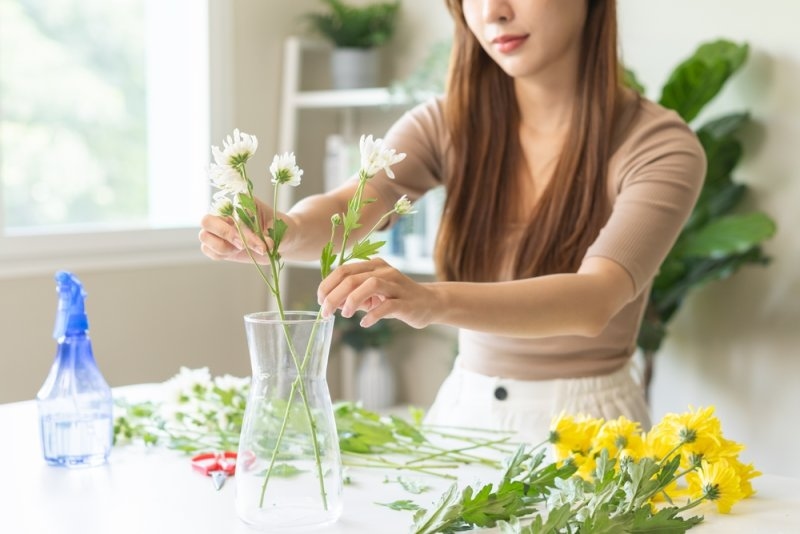
Learning how to arrange flowers in a vase turns an ordinary bunch of stems into a stunning centerpiece. According to behavioral research from Rutgers University, the presence of fresh flowers triggers immediate positive emotions, enhances mood satisfaction, and boosts creative energy in home living spaces. Bringing living color into your home serves as a simple form of daily self-care and artistic expression.
You do not need formal florist training or expensive tools to design breathtaking arrangements. Anyone can transform simple store-bought stems into custom display pieces that brighten any tabletop or entryway console.
In this complete guide, we will walk through essential preparation steps, color palette rules, and step-by-step arrangement techniques. Read on to discover simple secrets for crafting professional floral displays in your own living room.
Mastering how to arrange flowers in a vase for beginners starts with proper stem preparation and proper vessel selection. Clean tools and water quality directly impact how long your arrangement stays fresh.
Begin by selecting a vase that matches the height of your stems. A great rule of thumb is that your vase should measure roughly one-third to one-half the total height of your finished arrangement. Wash the vessel thoroughly with warm water and soap to remove lingering bacteria that clog stems.
Trim every stem at a sharp 45-degree angle using sharp shears rather than dull household scissors. This angled cut increases the surface area for water absorption and prevents the stem from resting flat on the bottom of the container. Remove all submerged foliage to keep the water crystal clear.
In this step, you need to simply focus on removing all leaves falling below the water line for the flower to have a clean space you breath in and make it look presentable.
Here, the flower stems are placed in a manner that allows the interconnected support to sustain and thrive by crisscrossing green foliage stems to create structural support.
Now just insert focal, filler, and accent blooms layer by layer, and your flowers are arranged; now simply look at them and admire them.
Try This: How Long Do Fresh Flowers Last & Caring Tips To Preserve?
Knowing how to arrange fresh flowers in a vase requires building a strong structural base before placing primary blossoms. Professional florists use greenery to construct a natural grid that holds delicate stems upright.
| Stem Category | Primary Function & Arrangement Position |
| Greenery Base | Eucalyptus or leather leaf inserted around the vase rim |
| Focal Blooms | Large, prominent flowers like roses or peonies placed centrally |
| Secondary Flowers | Medium carnations or tulips filling gaps between focal points |
| Textural Accents | Delicate baby's breath or sea lavender adding height and movement |
Understanding how to make a flower arrangement in a vase involves balancing focal points, filler textures, and delicate accent stems.
Select two or three large, striking blossoms to serve as the main attraction. Place these focal flowers at slight angles near the mouth of the vessel. Keeping heavy blooms lower creates visual weight and prevents the arrangement from looking top-heavy.
Surround your main focal points with medium-sized blossoms in complementary shades. Rotate the vase as you work to ensure your flower arrangement in a vase looks balanced and full from every viewing angle.
Learning how to arrange flowers in a vase like a florist relies on mastering proportional scaling and color coordination. Professional designers rarely mix every bright hue together randomly.
Following a simple DIY flower arrangement workflow guarantees stress-free success every single time you style a fresh bouquet.
| Step | Floral Assembly |
| Step 1: Base | Greenery Grid |
| Step 2: Focal | Primary Roses |
| Step 3: Accent | Airy Sprays |
Mixing various textures requires thoughtful pairing when discovering how to arrange flowers in a vase with different flowers. Combine round focal shapes like garden roses with vertical spires like snapdragons or larkspur.
Contrast velvety rose petals with dynamic greenery options like silver dollar eucalyptus, feathery ferns, or glossy ruscus. This textural variety creates visual interest that draws the eye across the entire composition naturally.
If your bouquet looks sparse, knowing how to arrange flowers in a vase to look fuller saves the day without buying extra stems.
| Technique | Method |
| 1. Stem Grid | Use clear waterproof tape to form a 1-inch grid over the top. |
| 2. Criss-Crossing | Insert stems at sharp angles so they support each other. |
| 3. Leafy Fillers | Utilize inexpensive bushy greenery like leather leaf fern. |
| 4. Short Trims | Cut stems shorter to bring blooms closer to the rim. |
Unlocking how to arrange grocery store flowers in a vase lets you elevate budget bundles into luxury centerpieces effortlessly. Standard supermarket bouquets often arrive wrapped tightly in plastic with flat foliage.
Separate the bundle immediately upon arriving home. Group stems by variety, strip lower leaves, and recut every end. Combine two budget bundles or mix in yard foliage to create lush, elevated arrangements affordably.
Learning how to arrange flowers in a vase without floral foam supports eco-friendly home styling while keeping blooms healthier. Foam crumbles easily and blocks stem water intake over time.
| Method | Material Used | Primary Advantage |
| Tape Grid | Clear waterproof tape | Creates rigid, invisible square cells across the vessel mouth |
| Chicken Wire | Coated metal mesh | Reusable structure offering 3D support for heavy stems |
| Natural Matrix | Woody foliage stems | Fully organic option that disappears inside clear glass |
Using a tape grid or folded chicken wire ball gives you total control over stem placement while allowing flowers to drink clean water freely.
Incorporating simple flower arranging tips extends the beauty of your centerpiece significantly. Keep arrangements far away from direct sunlight, heating vents, and ripening fruit bowls that emit damaging ethylene gas.
Change the water completely every two days. Recut stem ends by a half inch during water changes to clear blocked pathways and maintain hydration.
Must Try: How to Make a Bouquet of Flowers: Design the Best Bouquet
Designing beautiful floral displays at home brings warmth, color, and natural beauty into your everyday living routine. Throughout this guide, we covered essential preparation techniques, stem trimming practices, and proportional rules for selecting the ideal vessel. We explored how to build sturdy foliage bases, stagger stem heights for maximum volume, and create eco-friendly support structures without relying on single-use floral foam. Applying these simple styling methods allows you to transform inexpensive stems into captivating decor accents that impress dinner guests and family members alike.
Cultivating a creative home environment begins with celebrating simple natural details that bring genuine comfort. Taking time to trim fresh stems, arrange vibrant colors, and care for living blooms offers a grounding daily ritual that refreshes your mental space. Discover stunning farm-fresh stems, handcrafted vases, and artisan home decor inspiration today at Flover Shop.
Most fresh-cut flowers absorb lukewarm water around 100 degrees Fahrenheit much faster than ice-cold water. Warm water encourages stems to draw up moisture and nutrients efficiently. However, cold water is preferred for bulb flowers like tulips, daffodils, and hyacinths to prevent stems from drooping prematurely.
Keep clear glass vases crystal clean by washing them thoroughly with hot water, white vinegar, and a gentle dish soap before every use. Vinegar removes mineral buildup and bacterial residue that cause cloudy water. Always strip lower foliage that falls below the waterline to keep water completely clear.
Adding a single drop of plain liquid bleach per quart of water helps control bacterial growth in your vase. Bacteria clog stem ends and accelerate flower decay. Combine a drop of bleach with a teaspoon of sugar to nourish blossoms while keeping the water clean and odorless for days.
Tulips continue growing toward light sources even after being cut and placed in water. Prevent extreme drooping by choosing a tall vase that supports at least two-thirds of the stem length. Prick a tiny pinhole through the stem just below the bloom to release trapped air bubbles.
Cutting stems at a 45-degree angle prevents the cut end from sealing flat against the vase bottom, which blocks hydration. Trimming stems underwater prevents microscopic air pockets from entering the plant's vascular system, ensuring uninterrupted water intake from the moment stems enter the vessel.
This content was created by AI